
Newport News Arrest Warrants Begin With a Sworn Complaint
Newport News City complaints follow Va. Code § 19.2-72, which sets the oath and probable-cause requirements for arrest process. A magistrate or other authorized judicial officer weighs the sworn facts and issues a warrant only when that standard is met. Felony complaints carry extra authorization requirements on the court form. The public DC-311 form asks for the court and locality, the complainant, the offense date and place, supporting facts, information about the accused, a sworn signature, and the judicial action taken. Those fields describe a process. They are not a public lookup form. The Virginia arrest-warrant statute spells out the required process.
Arrest Warrants in Newport News City
An arrest warrant gives an officer authority to take a named or described person into custody and bring that person before a judicial officer. In Newport News City, the Magistrate's Office sits at the center of that early stage, handling probable-cause review and initial bail decisions. The underlying case then moves to the court that fits its type and stage: GDC, JDR, or Circuit. A summons works differently. Law or police policy permits it in certain circumstances, and it still requires a court appearance, but it skips the immediate-custody path. The court paper itself, and the office that issued it, tell you which process applies to your situation.
Newport News Arrest Warrants Reach the Magistrate
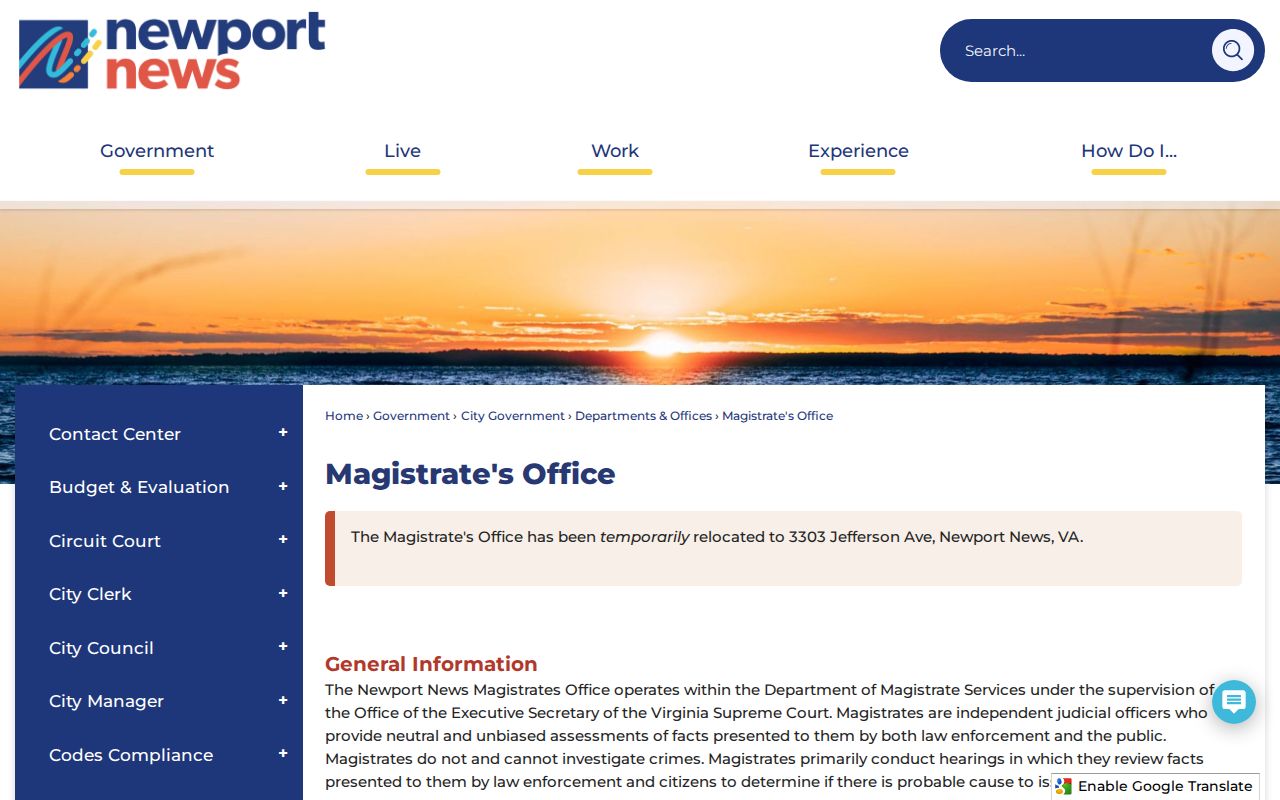
The Newport News Magistrate's Office stays open at all hours for judicial process and initial bail functions. It sits at 230 25th Street, inside the JDR courthouse. Magistrates cannot give legal advice, the office says, and they may not disclose pending criminal charges. For general warrant status, NNPD points the public to its warrant unit; questions about a case belong with the court clerk. Newport News City publishes the Magistrate's Office access instructions and its public role. For a police-listed matter, the Newport News Police active-warrant page is the place to check.
After a Newport News City arrest, the person goes before a judicial officer without unnecessary delay for review of release conditions.
What a Newport News City Arrest Warrant Contains
The Newport News Police Department's public table is not the warrant document itself. It lists a charge and a few subject descriptors, while the underlying complaint and court file hold the real facts and process fields. No warrant number, court, bond, or judge appears in the public row. Do not infer those details from it. Virginia's DC-311 complaint form records the sworn complaint that starts a request for process, but the form alone does not show that a magistrate issued a warrant in Newport News City.
| Warrant number | Not shown in NNPD table |
|---|---|
| Complaint source | DC-311 records the complainant and sworn facts presented for process. |
| Person and offense | The form identifies the accused and describes the alleged offense, date, place, and facts. |
| Judicial action | The complaint form records oath and magistrate, judge, or clerk action. |
| Bond and court | Not exposed in the NNPD row. Ask the court or magistrate about the controlling order. |
| Public row fields | Name, physical descriptors, issue date, and Warrant Charge may appear. |
Newport News Warrant Searches Do Not Use DC-311
In a Newport News City case, DC-311 is the criminal complaint form used to present sworn facts and request judicial process. It is not an online query, not an affidavit available in every case, and not a completed example. Virginia's court forms index also lists DC-318 and DC-331 for surety-related procedures. Whether a complaint or supporting record is public depends on the law and the case status. A FOIA request may reach existing public material, though investigative exemptions and other restrictions apply. The court clerk can explain where a filing belongs and what can be inspected. The Virginia GDC criminal forms index lists DC-311 without exposing anyone's case details.
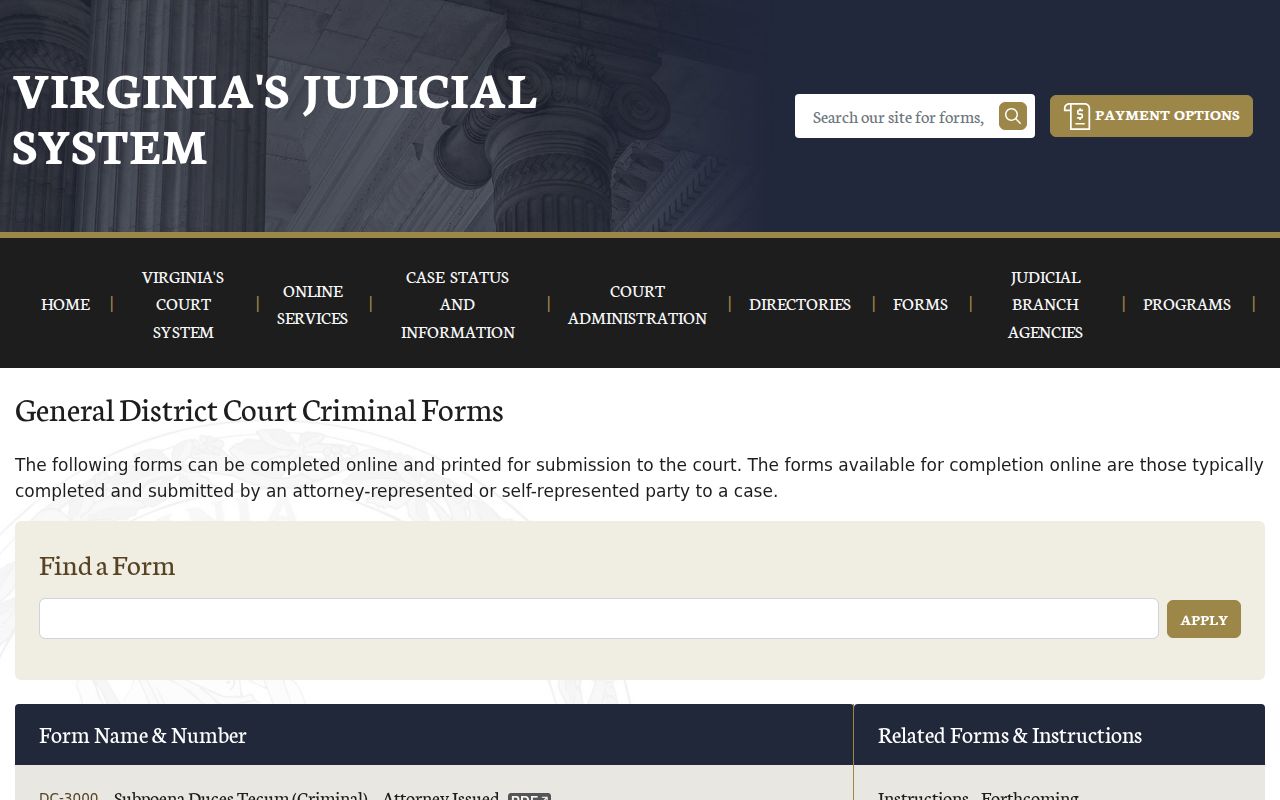
A form's fields describe what may be requested, not what any individual complaint contains.
How Newport News Arrest Warrants Are Served
Newport News Police policy OPS-405 requires officers to confirm warrant or capias information by radio, telephone, or teletype and keep the active confirmation on file before service. The policy also lets authorized agencies execute Virginia warrants and summonses anywhere in the Commonwealth. The Newport News Sheriff's Office then handles jail custody, court security, and the related release routing. After an arrest, Virginia Code § 19.2-80 requires a prompt appearance before a judicial officer for bail review. A warrant served with a summons may carry a court date under the local policy. The court, not the public dashboard, controls the case and the next appearance.
Newport News Warrant Service Moves to Court Review
Service in Newport News begins once an agency confirms the process and takes a person into custody or serves a summons. City Jail booking is followed by probable-cause and bail review before a magistrate. Release may mean a promise to appear, unsecured bond, secured bond, or other conditions Virginia law allows. The Newport News Sheriff's Office says a person may surrender on an arrest warrant at the City Jail at any time. Bring photo ID if you have it. Bring no other belongings beyond ID and cash, its public guidance says. Call the jail information line at 757-926-3984 to confirm current surrender or booking instructions. The Newport News Sheriff's Office contact page has the full details.
Arrest Warrant vs Summons vs Bench Warrant
These terms describe different routes into court in Newport News City. A summons directs a person to appear. An arrest warrant authorizes custody after probable-cause review. A bench warrant or capias usually follows an unmet obligation in an existing case; see the Newport News bench-warrant process for the local FTA distinction. Under Va. Code § 19.2-72, a complaint is made under oath, while magistrate review and release decisions follow separate rules.
| Feature | Arrest Warrant | Summons | Bench Warrant |
|---|---|---|---|
| What it orders | Take a person into custody | Appear at a stated time | Return to court after a missed obligation |
| Basis | Sworn facts and probable cause | Process allowed without immediate custody | FTA, contempt, or another court order |
| Issuer | Magistrate or authorized judicial officer | Authorized court process | Court handling the existing case |
| Next step | Confirm, seek counsel, address bail | Attend the date on the summons | Ask issuing court about appearance or recall |
Federal Newport News Warrants Follow EDVA
Federal cases in the Newport News City Division do not sit in NNPD's local warrant table or in Virginia OCIS. Those warrant records live in the Eastern District of Virginia. You can search PACER for federal filings. A fugitive or execution question may bring in the U.S. Marshals Service. Do not take a federal matter to Newport News Police as if it were local process. The EDVA courthouse sits at 2400 West Avenue. Bring valid photo ID, expect limits on electronics, and read the court's official instructions before you go.
What to Do If You Have a Newport News Arrest Warrant
Confirm the warrant first. Ask Newport News Police or the issuing court, then talk with a Virginia attorney about the safest response. The court may want a motion to recall or quash, voluntary surrender, bond review, or a set appearance date. Newport News City sets no fixed bond schedule. The Sheriff does publish a surrender route, but a judicial officer decides release terms. Keep the case number and every court paper. After surrender or service, save the release order and your next court date. Family helping out should use official police, court, and jail channels rather than a copied table row.
Important: Confirm the current court process with counsel or the issuing clerk before choosing surrender, bond, or a motion to recall.